Why Is My Floor Sagging? Common Causes in Older Nashville Homes
If you own an older home in Nashville, a sagging floor isn't just an aesthetic concern. It's a red flag that something structural needs attention. The good news is that understanding what causes the sag is the first step toward fixing it.
The most common culprit behind sagging floors is Wood Rot & Dry Rot Repair damage to the floor joists or support beams beneath your home. In Nashville's humid climate, wood deteriorates faster than in drier regions. Moisture seeps into crawl spaces and basements, softening the wood fibers and reducing their load-bearing capacity. Over months or years, the weakened joists can no longer support the weight of your flooring, walls, and furniture above, causing that telltale dip or bounce.
Another frequent cause is Termite Damage Repair issues. Termites tunnel through wood, creating hollow galleries that compromise structural integrity. Unlike rot, which is gradual and visible as discoloration, termite damage can hide inside the wood for years before the floor begins to sag noticeably. Undersized joists, inadequate support posts, and settling foundations also contribute to floor sagging, especially in homes built decades ago when building codes were less stringent than today's standards.
How Floor Joist Repair Works: Sistering and Other Solutions
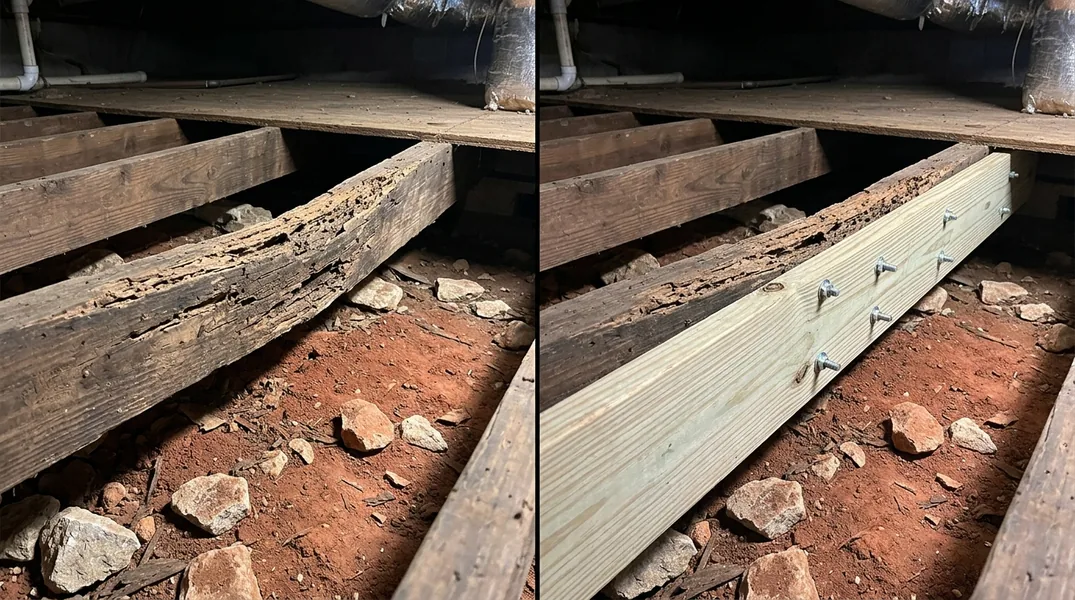
Floor Joist & Subfloor Repair is often the most effective remedy for sagging floors. One of the most trusted methods is called sistering, a process where a new joist is bolted alongside a damaged or weakened existing joist. This reinforcement doubles the structural support in that area and can lift a sagging floor back to its original level.
The sistering process begins with a thorough inspection. A carpenter will examine the joists from below, checking for signs of rot, termite damage, or excessive deflection. Once the damaged section is identified, a new pressure-treated joist or engineered lumber beam is cut to length and positioned tightly against the compromised joist. The two are then fastened together with bolts, nails, or screws spaced every 16 inches along their length. This creates a composite beam that shares the load equally.
In some cases, sistering alone isn't enough. If the damage is extensive or if the foundation itself has shifted, additional support posts or Beam Replacement & Load-Bearing Wall Removal work may be necessary. A structural engineer can assess whether temporary support beams are needed during the repair process to prevent further settling. The goal is always to restore the floor to level (or as close as possible) while ensuring the repair lasts for decades to come.
Sagging Floor Repair Cost in Nashville: What to Budget
Understanding pricing for sagging floor repair helps homeowners plan ahead. The cost varies significantly based on the extent of damage, the size of the affected area, and the type of repair needed. A simple sistering job for one or two joists might cost between 800 and 2,500 dollars, while more extensive repairs involving multiple joists, foundation work, or beam replacement can range from 5,000 to 15,000 dollars or more.
Several factors influence the final bill. First, accessibility matters. If your crawl space is tight and cramped, workers spend more time maneuvering materials and tools, which increases labor costs. Second, the severity of rot or termite damage determines how much wood needs to be replaced. A joist with surface-level rot might only need sistering, while one that's severely compromised may require complete replacement. Third, if the sagging floor has caused secondary damage to walls, plumbing, or electrical systems, those repairs add to the total expense.
The best way to know your actual cost is to schedule a free estimate with Nashville Carpentry. We'll inspect the damage, identify all affected areas, and provide a detailed quote before any work begins. Our team can also discuss financing options and help you prioritize repairs if your budget requires a phased approach. Call us at (629) 317-1838 to arrange an inspection.
Signs Your Floor Is Sagging: When to Call a Professional
Spotting a sagging floor early can prevent expensive structural damage down the road. The most obvious sign is a visible dip or slope in the floor when you look across the room. You might notice that a marble rolled across the floor doesn't stay put, or that doorways are no longer square, making doors difficult to close. Some homeowners describe the sensation of walking on a trampoline or feeling the floor bounce under their feet.
Less obvious signs include cracks in walls, especially diagonal cracks radiating from corners of windows or doors. These cracks form as the house settles unevenly due to sagging joists. You might also notice gaps appearing between the floor and baseboards, or squeaking and creaking sounds that weren't there before. In kitchens or bathrooms, cabinets may start to pull away from walls, and appliances may rock slightly when you move them.
If you've noticed any of these warning signs in your home, don't wait. A sagging floor will only worsen over time, and the longer you delay, the more expensive the repair becomes. Water damage spreads, rot deepens, and the structural stress transfers to other parts of your home. Contact Nashville Carpentry for a professional assessment. We serve the entire Nashville area and can diagnose the root cause of your sagging floor, then recommend the best repair solution for your situation.
The Repair Process: What to Expect from Start to Finish
Understanding the repair timeline helps you prepare for the work ahead. Most sagging floor repairs take between three to ten business days, depending on complexity. The process begins with a detailed inspection, where our team documents the damage with photos and measurements. We'll assess whether temporary support is needed to stabilize the floor during repairs, and we'll identify any secondary issues like mold, pest damage, or plumbing concerns that need addressing.
Once we've developed a repair plan, we install temporary support beams if necessary. These temporary supports carry the load of the floor above while we work on the joists below. We then remove any rotted or severely damaged wood and install new sistered joists, replacement beams, or additional support posts. Each new component is secured according to current building codes and engineered specifications. If the subfloor itself is damaged, we'll replace those sections as well to ensure a solid, level surface.
After the structural repairs are complete, we carefully remove the temporary supports and verify that the floor is level and stable. We'll fill any gaps, ensure all fasteners are tight, and perform a final walk-through with you to confirm the work meets your expectations. Throughout the process, our team maintains a clean job site and minimizes disruption to your daily life. We're committed to transparent communication, so you'll always know where we are in the process and what to expect next.
Preventing Future Sagging: Maintenance Tips for Nashville Homeowners
Once your floor is repaired, preventive maintenance keeps it stable for years to come. The most important step is moisture control. Ensure your crawl space or basement has proper drainage and ventilation. Install a dehumidifier if moisture levels stay above 60 percent, and seal any cracks in foundation walls. In your kitchen and bathrooms, fix leaky pipes promptly and ensure water doesn't pool under sinks or around toilets. These simple steps dramatically reduce the risk of rot and termite infestation.
Regular inspections are equally valuable. Once every two to three years, take a flashlight and examine your joists and beams from below. Look for soft spots, discoloration, or signs of insect activity. Early detection of new problems allows for quick, inexpensive repairs before they become structural emergencies. If you live in an older home or a historically humid area of Nashville, consider having a professional inspection annually. The small investment in prevention saves thousands in emergency repairs.
Finally, maintain proper grading around your home's foundation. Soil should slope away from the house so water drains away rather than pooling against the foundation. Keep gutters clean and ensure downspouts direct water at least six feet away from the house. These exterior maintenance tasks protect your entire home's structural integrity, not just the floors. When you combine smart maintenance with prompt professional repairs, your home stays level, safe, and valuable for decades to come.
Looking for a professional carpentry contractor in Nashville? Nashville Carpentry responds fast for all your carpentry needs.
Get a Free QuoteOur services: Wood Rot & Dry Rot Repair · Termite Damage Repair · Floor Joist & Subfloor Repair