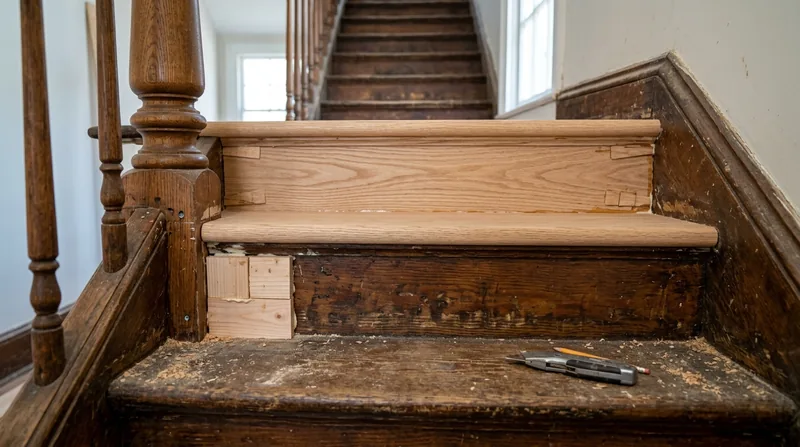




Nashville's staircases tell the story of the city. From the grand curved banisters climbing the foyers of Belle Meade estates to the tight, narrow treads in Germantown Victorian rowhouses, from the solid oak steps in Inglewood bungalows to the worn hardwood stringers in East Nashville craftsman homes, stairs carry the weight of daily life and decades of use. Stair and railing repair in Nashville is more than cosmetic work. It's structural carpentry that keeps these passages safe, preserves the character of older homes, and addresses the real wear that humidity, temperature swing, and foot traffic inflict on wood every single day. We repair squeaky treads, tighten loose banisters, rebuild worn stringers, restore period railings, and install code-compliant handrails and attic ladders. We work on the homes that define Nashville's neighborhoods, and we know the wood, the climate, and the building codes that govern this work.
Why Stair and Railing Repair Matters in Nashville's Historic and Newer Homes
Nashville's residential stock spans more than a century. The humid subtropical climate, with hot summers and mild winters, drives seasonal wood movement. Older staircases, built from solid hardwoods like oak and tulip poplar, absorb and release moisture constantly. Newer stairs in brick-veneer subdivisions around Antioch, Donelson, and Hermitage face the same forces. Loose balusters, squeaking treads, and sagging stringers aren't just annoying; they're safety issues. A wobbly handrail can fail when someone relies on it. A cracked stringer can shift the load unevenly across the whole run. Spring storms and the occasional severe weather event also stress structural connections. Getting stairs and railings right means safe passage and honest repair work before a bigger failure happens.
- We tighten loose balusters and newel posts without removing the entire railing system.
- We repair squeaky treads by addressing the fastening and wood movement underneath.
- We rebuild or sister damaged stringers, the main structural beams that carry the entire staircase.
- We restore period railings to their original profile and joinery, preserving architectural character.
- We install code-compliant handrails and attic ladders that meet Nashville and Tennessee building standards.
Each repair starts with understanding what's loose, what's cracked, and what's safe to address versus what needs replacement.
Key info: A loose baluster in a Belle Meade estate or a squeaking tread in an East Nashville bungalow often signals wood movement or fastening failure, not structural collapse. We diagnose the cause, repair or replace the specific component, and leave the rest of the staircase intact. Many repairs cost far less than a full stair replacement and preserve the home's original character.
For guidance on whether your stairs need a permit (some jurisdictions require them for certain alterations), check with the Nashville Building and Codes Enforcement Division or your local city or county building department.
How We Repair and Rebuild Stairs and Railings in Nashville
Our process is straightforward. We start with a thorough inspection: we climb the stairs, check for movement, test balusters, sight the stringers, and identify the root cause of each problem. We explain what we find in plain language, not jargon. Then we propose repair or replacement, with honest reasoning. We work on one staircase at a time, using the same carpenters from start to finish, so you're not managing a parade of subcontractors. We source materials that match the existing wood species and profile whenever possible. For period railings, we pay attention to original joinery, scribing, and finish. For new code-compliant work, we verify local requirements and build to standard.
- We inspect the entire staircase, from the newel post and balusters to the stringers and treads underneath.
- We identify the cause of squeaking, looseness, or visible damage before recommending a fix.
- We repair balusters and newel posts by tightening fasteners, replacing broken sections, or sistering weak wood.
- We rebuild stringers if the damage is structural, or reinforce them with sister joists if repair is sound.
- We install new handrails and railings to current code, with proper spacing, height, and load capacity.
- We finish all exposed wood to match the existing staircase, whether stain, paint, or polyurethane.
The result is a safe, solid staircase that works the way it should and looks like it belongs in your home.
Example: A Germantown Victorian rowhouse had a loose baluster and squeaking treads on the second-floor landing. We found that the baluster was nailed (not mortised) and the fasteners had backed out due to wood movement. The treads were squeaking because the nails connecting them to the stringers had also loosened. We removed the balusters, re-fastened them with screws and glue, and addressed the tread fastening from underneath. No replacement needed. Cost was a fraction of a full railing rebuild, and the original character stayed intact.
If you have wood rot or structural damage to the stringers or treads, we often recommend a wood rot repair approach before deciding on full replacement. For more complex framing or load-bearing concerns, we also offer framing and structural carpentry services.
Common Stair and Railing Repair Methods
| Approach | Description | Best For |
|---|---|---|
| Tightening and re-fastening | Remove loose balusters or treads, clean joints, re-secure with screws and construction adhesive. | Squeaking treads, loose balusters, minor movement from wood shrinkage. |
| Baluster and newel post repair | Replace cracked or broken balusters in kind, re-mortise or re-fasten newel posts to the stringers and landing. | Broken balusters, loose newel posts, damaged handrail connections. |
| Stringer sistering or rebuilding | Reinforce a damaged stringer by sistering a new board alongside it, or rebuild the stringer if damage is extensive. | Cracked, split, or sagging stringers; wood rot in the stringer itself. |
| Tread replacement | Remove and replace individual treads or entire tread runs with new hardwood matching the original species. | Badly worn or damaged treads, rot in the tread itself, cosmetic refresh. |
| Railing restoration and code upgrade | Restore period railings to original profile or install new handrails and balusters to meet current building codes. | Historic homes, safety upgrades, code compliance for renovations or sales. |
| Attic ladder installation | Install a new pull-down attic ladder or repair an existing one, with proper framing and clearance. | Access to attic storage, replacing broken or missing ladders. |
Stair and Railing Repair Cost in Nashville: What to Expect
Stair and railing repair in Nashville starts at around $600 for straightforward work like tightening loose balusters or re-fastening squeaky treads. Most repairs fall in the $800 to $2,500 range, depending on what needs fixing. A full stringer rebuild or extensive baluster replacement can run higher. The cost depends on several factors: the number of treads and balusters involved, whether the stringer needs repair or replacement, the wood species and how hard it is to match, how much of the railing system needs work, and whether we encounter rot or structural damage that wasn't visible at first. Access also matters. A staircase in the middle of a home is easier to work on than one in a tight corner or next to active living space. Getting 2 or 3 estimates is smart. Each carpenter may see the problem differently, and the estimate tells you what's included and what's not.
For a detailed breakdown of our pricing across all services, visit our full pricing overview. We offer free estimates with no obligation. Call us at (629) 317-1838 and we'll schedule a walkthrough, usually within 24 hours.
Stair and Railing Repair Near Me: What Nashville Homeowners Should Know When Hiring a Carpenter
When you're looking for a carpenter to repair your stairs and railings, start with the basics. Make sure the contractor is fully insured and carries liability coverage. Ask for references, especially from Nashville-area homeowners with similar work. Check whether your city or county requires a permit for the work you're planning. In some cases, alterations to railings or structural changes to stairs need a permit, and requirements vary by jurisdiction. Your local building department can tell you what applies. If you live in a historic district or have HOA restrictions, check those requirements too. Some neighborhoods in Nashville, like parts of Germantown or Belle Meade, have design guidelines that affect how railings and trim can be modified. Get multiple estimates and ask each contractor to explain what they're proposing and why. The cheapest bid isn't always the best value if it means skipping proper fastening or using mismatched materials. A good carpenter will spend time on your stairs, explain what's wrong, and show you the work as it progresses.
- Verify that the contractor is fully insured with current liability coverage before signing a contract.
- Ask for at least two references from recent Nashville-area stair and railing repair jobs.
- Check with your local building department about permit requirements for the specific work you need done.
- Review any HOA rules or historic district guidelines that might affect the repair or materials used.
- Get written estimates from 2 or 3 contractors and compare what each one includes in the scope of work.
- Ask questions about materials, fastening methods, finish, and timeline before committing.
When you're ready to move forward, contact us for a free estimate. We'll walk your stairs, listen to what's bothering you, and give you an honest assessment of what needs to happen next.
Stair & Railing Repair in Nashville: Pricing Guide
| Service | Price | Details |
|---|---|---|
| Loose balusters or squeaky treads | Starting at $600 | Tightening, re-fastening, and minor joint repair; cost depends on how many balusters or treads are affected |
| Single baluster or newel post replacement | Starting at $800 | Remove and replace one broken baluster or repair a loose newel post; includes material and fastening |
| Stringer repair or sistering | Starting at $1,200 | Reinforce or partially rebuild a damaged stringer; cost increases if rot is present or multiple stringers need work |
| Full tread replacement or railing restoration | Starting at $1,500 | Replace one or more treads, or restore a period railing to original profile; material and species matching affect final cost |
| Complex or full staircase rebuild | On estimate | Multiple stringers, extensive rot, code-compliant handrail installation, or attic ladder; requires on-site inspection |
| Free estimate | No charge | Response within 24 hours at (629) 317-1838; includes walkthrough, assessment, and written scope of work |
Indicative pricing, the exact cost depends on square footage, finish, and site access. Free personalized estimate within 24h at (629) 317-1838.


