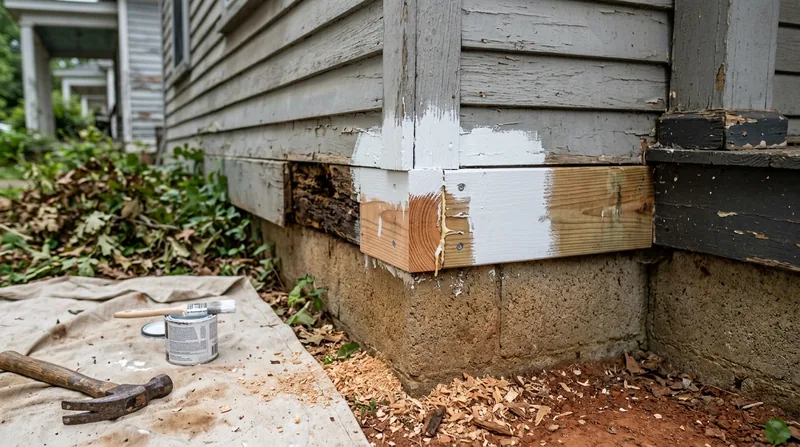




Nashville's hot, humid summers and mild winters make wood rot and dry rot repair a fact of life for the city's craftsman bungalows, Victorian rowhouses, and historic estates. The combination of moisture, temperature swings, and the region's termite pressure creates ideal conditions for decay in exterior framing, sill plates, floor joists, and trim. We cut out decayed wood, treat surrounding framing, and rebuild with rot-resistant lumber. This is permanent repair, not a cosmetic patch. Whether your Belle Meade Greek Revival shows rot at the sill plate, your East Nashville bungalow has soft spots in the rim joist, or your Murfreesboro home needs structural joists replaced, we diagnose the damage, explain what caused it, and propose repair or replacement based on what the wood tells us.
Why Wood Rot and Dry Rot Matter in Nashville's Climate
Nashville sits in a humid subtropical zone where wood decay happens year-round, but peaks in spring and summer when moisture and warmth combine. Unlike drier climates where rot moves slowly, our weather cycles wet-dry-wet constantly, swelling and shrinking wood fibers and opening cracks where water enters. Sill plates, band boards, window casings, and deck framing bear the brunt because they sit closest to soil moisture and roof runoff. Left unchecked, rot spreads into floor joists and structural framing, weakening the home's skeleton.
- Decay in sill plates and rim joists compromises the connection between foundation and framing, allowing floors to settle unevenly.
- Soft spots in floor joists create springy, unsafe floors and signal structural compromise that spreads if not addressed.
- Exterior trim and fascia rot invites water deeper into walls, eventually reaching studs and sheathing behind the cladding.
- Early detection and repair cost a fraction of what structural replacement demands when rot reaches load-bearing members.
Catching rot early saves money and prevents costly structural repairs down the road.
Key info: Nashville's humid subtropical climate creates continuous decay pressure. A sill plate showing surface rot today can become a structural liability in two to three years if moisture sources are not controlled. We remove soft wood, treat the surrounding framing, and rebuild with pressure-treated lumber or naturally rot-resistant species.
For more on how termite damage and wood rot interact in Nashville's building stock, see our termite damage repair service.
How We Repair Wood Rot and Dry Rot in Nashville Homes
Our process starts with a visual inspection and moisture testing to understand how water enters and where decay has spread. We probe suspect framing with a sharp tool to find the boundary between sound and soft wood. Once we map the damage, we cut out the decayed section, treat the surrounding wood to prevent new growth, and rebuild the structural member with pressure-treated lumber, naturally rot-resistant species like redwood, or Douglas fir, depending on the application and location. The goal is a repair that lasts as long as the original framing, not a temporary patch.
- We identify the moisture source (roof leak, gutter failure, ground-level splash, or condensation) so the rot does not return after repair.
- We remove decayed wood in full sections, not just the visibly soft parts, to eliminate hidden fungal growth at the boundary.
- We treat cut edges and surrounding framing with a wood preservative appropriate to the location and exposure.
- We install new framing, sistering joists where needed, and use fasteners and flashing that resist corrosion in our humid climate.
- We restore trim, casing, or exterior finish to match the original appearance and protect the repair from future weather.
Every repair includes moisture management so the same problem does not develop again in five years.
Example: A Germantown Victorian with soft sill plate and water staining in the basement. We removed the rotted 12-inch section, treated the band board and rim joist with preservative, sistered a new pressure-treated sill with bolts every 4 feet, and sealed the foundation joint with polyurethane caulk. Cost was under $1,200 and took one day. Without repair, the sill would have failed within two years, requiring underpinning and major structural work.
For structural framing issues that go deeper than rot repair, see our framing and structural carpentry service.
Wood Rot Repair Methods
| Approach | Description | Best for |
|---|---|---|
| Sistering | A new joist or beam bolted alongside the existing one to restore load capacity without full replacement. | Floor joists and rim joists where partial rot leaves the core structurally sound. |
| Localized Removal and Rebuild | Cut out the decayed section and install a new piece, scarfing or bolting the joint for strength and durability. | Sill plates, window sills, band boards, and trim where rot is confined to one area. |
| Full Member Replacement | Remove the entire joist, beam, or stud and install new framing sized and fastened to code. | Structural members where rot is extensive or where the member is undersized for current loads. |
| Preservative Treatment | Apply wood preservative to cut ends and surrounding framing to arrest fungal growth and protect against future decay. | All repairs, especially where moisture sources persist or cannot be fully eliminated. |
Wood Rot and Dry Rot Repair Cost in Nashville: What to Expect
Wood rot repair in Nashville starts at $650 for straightforward sill plate or trim repairs on single-story homes, and scales upward with the scope of decay, framing member size, and structural complexity. A floor joist repair or rim joist sistering typically runs $1,200 to $2,500 depending on how many joists need work and whether the subfloor must be cut and patched. Extensive rot in multiple floor joists or a main beam can exceed $4,000 and may require a structural engineer to size the replacement member and verify load paths.
Cost factors include the size and depth of the decay, the wood species and structural significance of the member, access difficulty, and whether moisture sources must be addressed separately (gutter replacement, foundation sealing, roof repair). A small sill plate repair on a ground-level cottage takes a few hours. A full-length rim joist replacement on a 1,500-square-foot home can take two to three days and cost proportionally more.
We recommend getting two or three estimates from local carpenters so you understand the scope and the range of approaches. Some contractors patch rot with epoxy fillers. We remove decayed wood and rebuild with sound lumber because that repair lasts. The upfront cost is higher, but the durability justifies it in Nashville's climate.
For detailed pricing and a free estimate, call (629) 317-1838 or visit our full pricing overview.
Wood Rot and Dry Rot Repair Near Me: What Nashville Homeowners Should Know When Hiring
When you call a carpenter for wood rot repair, ask whether they are fully insured and can provide proof of coverage. Verify that the contractor has worked on homes similar to yours, especially if your home is historic or has specific architectural details like crown molding, wainscoting, or custom trim that must match. Get references from at least two recent jobs and call them. Ask whether the contractor addresses moisture sources or only removes rot. A good repair includes both.
If your home is in Belle Meade, Germantown, Lockeland Springs, or East Nashville, check whether your property is in a historic district and whether the local historic commission has design guidelines for exterior repairs. Some repairs may require approval before work begins. If you live in an HOA community, review your covenants to see whether exterior work needs approval. Permits are commonly required for structural repairs like sistering floor joists or replacing load-bearing sill plates, so ask your contractor whether a permit is needed and who obtains it. The Nashville Building Department can clarify permit thresholds for your specific repair.
Always get the estimate in writing, including what work is included, what materials are used, and the timeline. Ask how the contractor will manage moisture after the repair is complete. A repair that does not address the water source will rot again in a few years.
Ready to discuss your wood rot repair? Contact us for a free estimate. We respond within 24 hours and can often schedule an inspection the same week.
Wood Rot & Dry Rot Repair in Nashville: Pricing Guide
| Service | Price | Details |
|---|---|---|
| Sill plate or exterior trim rot repair | Starting at $650 | Small localized decay on ground-level trim or sill, includes removal, treatment, and rebuild with pressure-treated lumber |
| Floor joist or rim joist sistering | Starting at $1,200 | Single joist repair with new pressure-treated lumber bolted alongside, includes subfloor patching and fastening to code |
| Multiple joists or extensive structural rot | Starting at $2,500 | Two or more joists, band board decay, or rot affecting load paths, requires on-site evaluation to size members correctly |
| Full member replacement or complex structural work | On estimate | Main beams, load-bearing walls, or widespread decay across multiple framing members requires structural assessment and permitting |
| Travel within Nashville and surrounding areas | Included | No separate mileage fee or travel charge for estimates and repairs throughout Nashville and nearby communities |
| Free estimate and consultation | Free | Response within 24 hours at (629) 317-1838, includes visual inspection and moisture testing, no obligation to book |
Indicative pricing, the exact cost depends on square footage, finish, and site access. Free personalized estimate within 24h at (629) 317-1838.


