Carpenter in Nashville, TN: Wood Rot, Structure & Finish Work
Nashville Carpentry is a local residential carpentry shop serving Nashville and the surrounding areas, including Belle Meade, Germantown, East Nashville, and beyond. We work on the full span of carpentry: structural repair of rotted and insect-damaged wood, floor joists and subfloor systems, load-bearing walls and beams, framing carpentry, and finish work from trim and crown molding to custom built-ins and doors. Homeowners searching for a carpenter near me in Nashville often find us when they discover rot in a deck frame or siding, soft spots in a floor, or termite damage on a pest inspection report. We are the same carpenters on every job, and we know this building stock.
Nashville's housing ranges from grand Greek Revival estates in Belle Meade and historic Victorian rowhouses in Germantown to early-1900s craftsman bungalows and shotgun cottages across East Nashville, Inglewood, and Lockeland Springs. Many of these homes have settled over a century, and the humid subtropical climate, red clay soil, and genuine termite pressure year-round mean wood fails here in specific, predictable ways. We read those failures, explain what they are, and quote you an honest repair or replacement. Call (629) 317-1838 or request a free wood rot inspection to get started.
Why Wood Fails in Nashville, and How We Read It
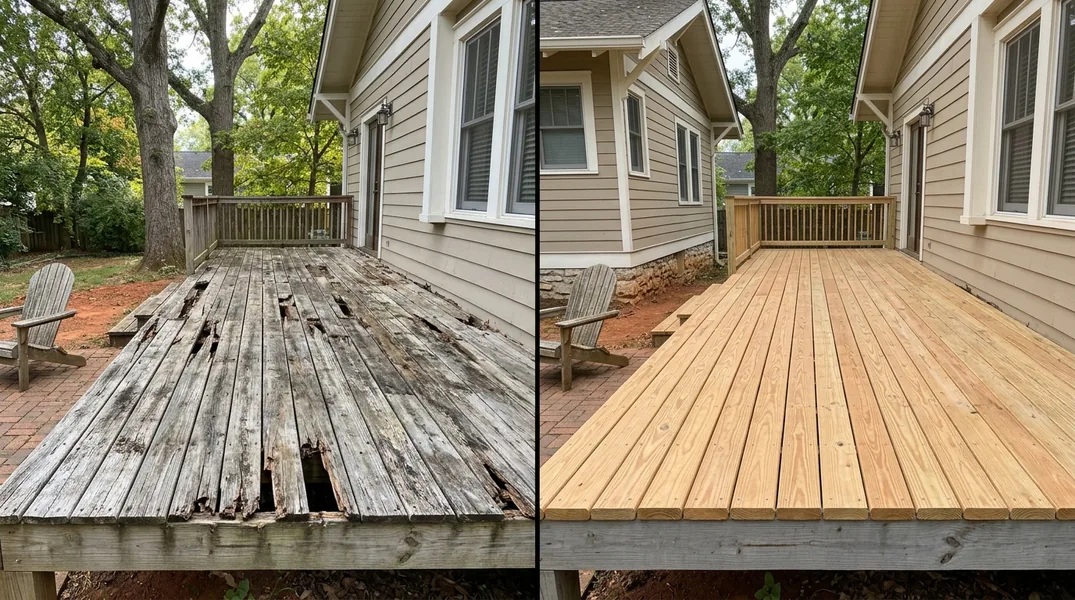
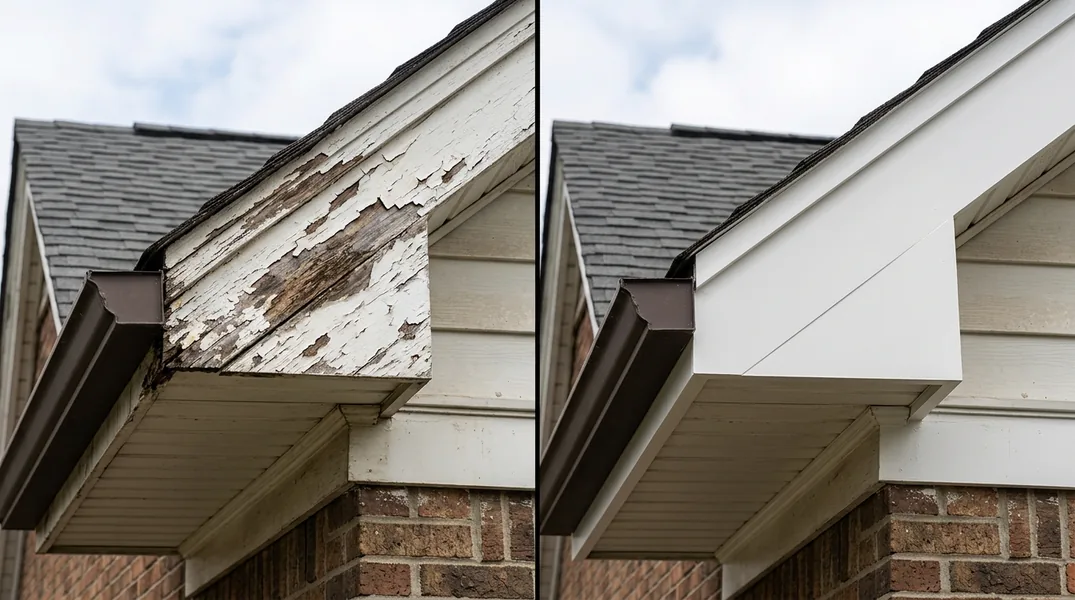
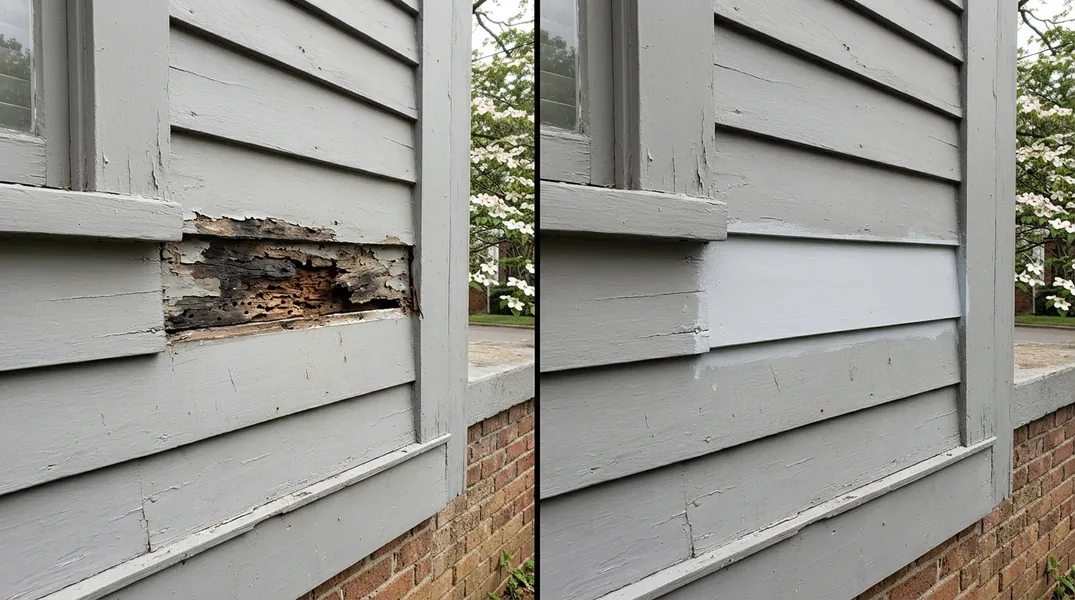
Wood rot in Nashville happens for a reason, and understanding that reason is the first step to a repair that holds. Dry rot is a fungus that thrives in the sustained moisture our humid subtropical climate provides, especially where water sits or drains poorly: at window sills, door thresholds, deck ledgers, and fascia boards. It does not require standing water, only the dampness that comes from rain, condensation, or slow drainage through red clay soil. Termites and wood-boring beetles work differently. They hollow a member from the inside while the paint film on the surface stays intact, leaving a shell that looks sound until a probe finds air underneath. We repair and replace damaged wood based on your own pest inspection report. We do not treat, fumigate, or perform pest control, which is a separate regulated trade.
Reading rot means probing to find where sound wood begins, checking the framing behind the visible surface, and tracing the water path that fed it. A surface layer of decay on a structurally sound member can be cut out and rebuilt with new wood. A member that has lost significant cross-section gets replaced. The honest call is this: filler over rot is not a repair. If the water source is not closed, the rot returns. We quote both repair and replacement when both are real options, and we explain the difference in cost and durability. Call (629) 317-1838 to discuss what you have found, or learn more about our wood rot repair process.
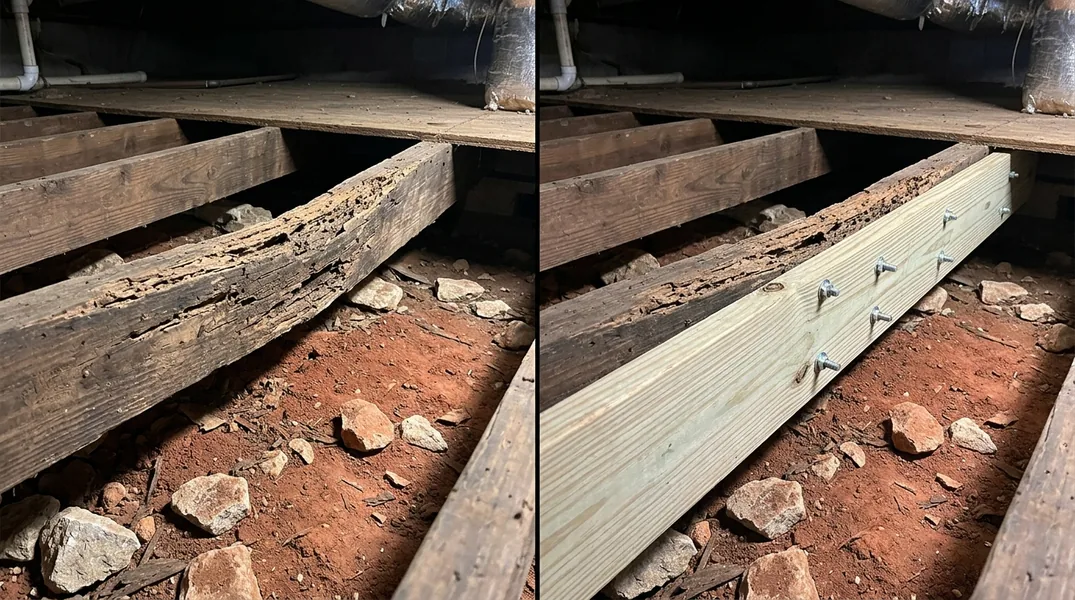
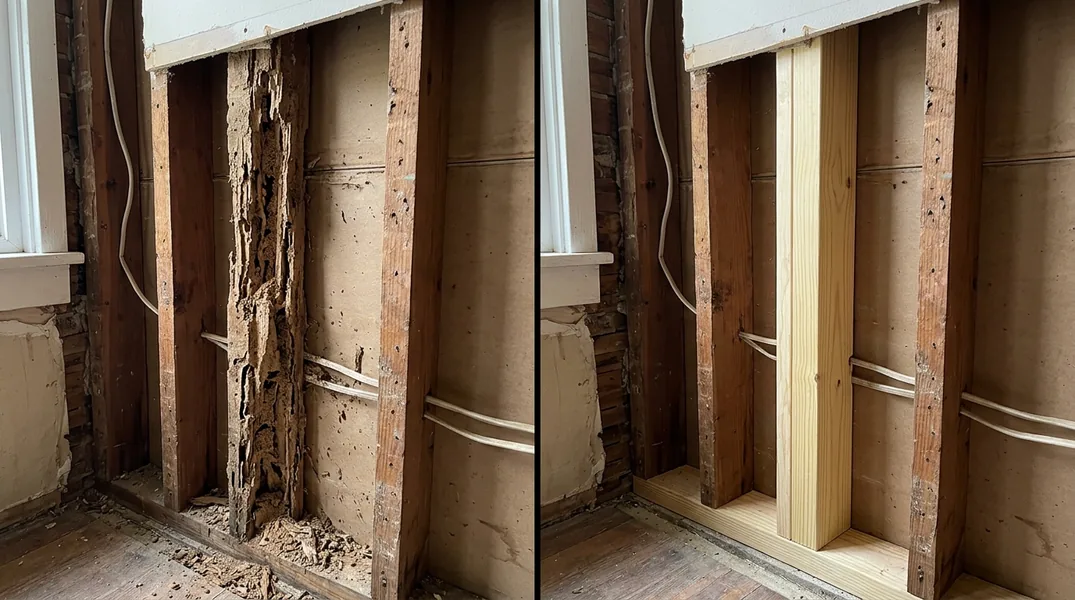
Termite damage and wood-boring beetle damage require the same honest assessment. We examine the extent of the hollow, measure what sound wood remains, and determine whether the member can be sistered, locally rebuilt, or must be replaced. Termite damage repair is structural work, and it matters that it be done right. We work from your pest inspection report and focus on the wood itself, leaving any treatment or prevention to the pest control professional.
Structural Carpentry in Nashville: Joists, Beams and Settling
A sloping floor in a century-old Nashville house is usually the normal result of settling, not active failure. Buildings here have settled slowly over decades, and sticking doors and uneven floors are part of the landscape. What matters is whether movement is still happening and how the structural members are performing at their bearing points. Floor joist and subfloor repair ranges from sistering a joist (adding a new member alongside a weakened one) to replacing a section of subfloor or rim joist. A sill plate that has rotted away must be rebuilt or replaced to carry the weight of the wall above. We assess each situation by probing and measuring, and we propose repair when the wood justifies it and replacement when it does not.
Larger structural work such as beam replacement or load-bearing wall removal commonly requires drawings and load calculations from a licensed structural engineer, along with a permit from the local building department. We build to those engineered drawings and work with the local authority to ensure the work meets code. Beam sizing and the distribution of load across a wall removal are not guesswork, and we do not produce engineering opinions or calculations ourselves. We frame what the engineer specifies.
Finish Carpentry and Built-Ins in Nashville Homes
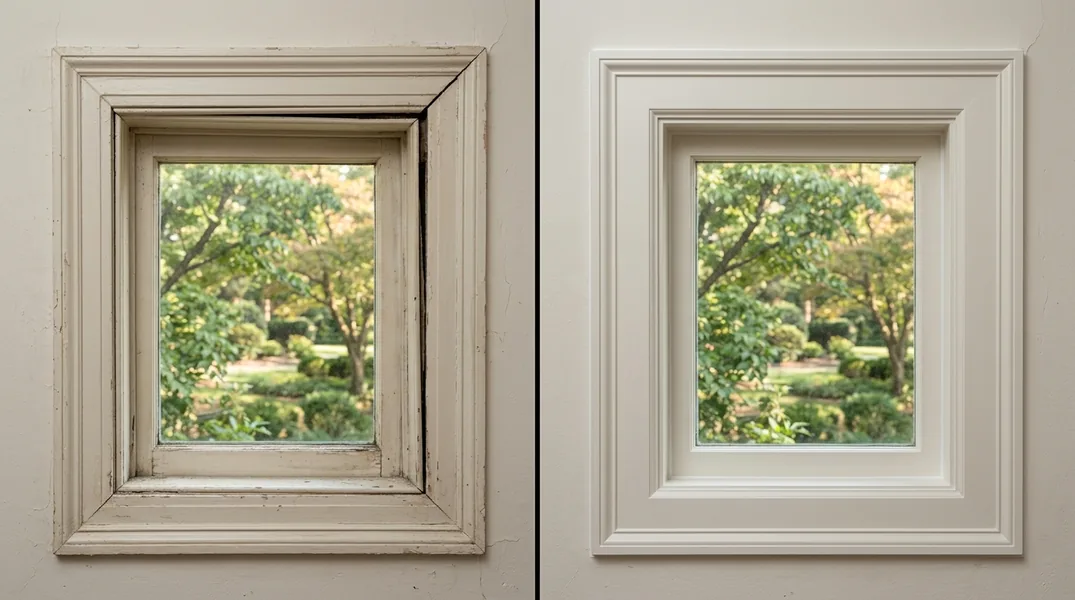
Finish carpentry in Nashville's older housing stock is about matching what is already there and respecting the constraints of buildings that have settled unevenly. A coped joint in crown molding holds better than a caulked corner and looks sharper. Baseboard and casing must be scribed to walls that are neither flat nor plumb, and reveals must be consistent even when the openings are out of square. Bay windows, compact floor plans, and original millwork worth preserving are common in East Nashville bungalows and Germantown rowhouses, and we match profiles and details rather than replace them with off-the-shelf alternatives. Finish and trim carpentry includes crown molding, baseboard, wainscoting, casing, and custom work.
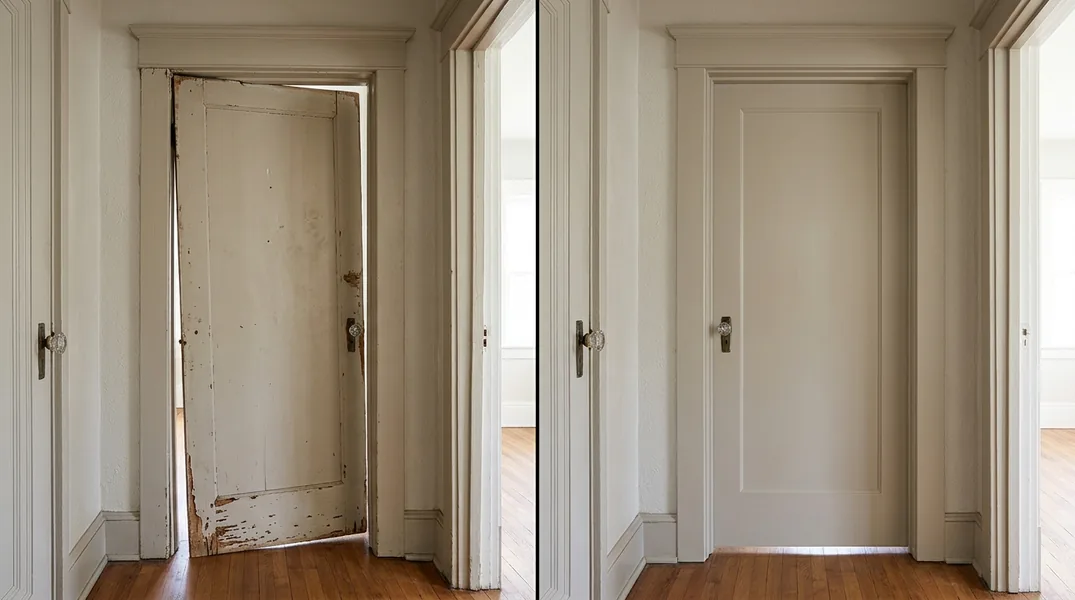
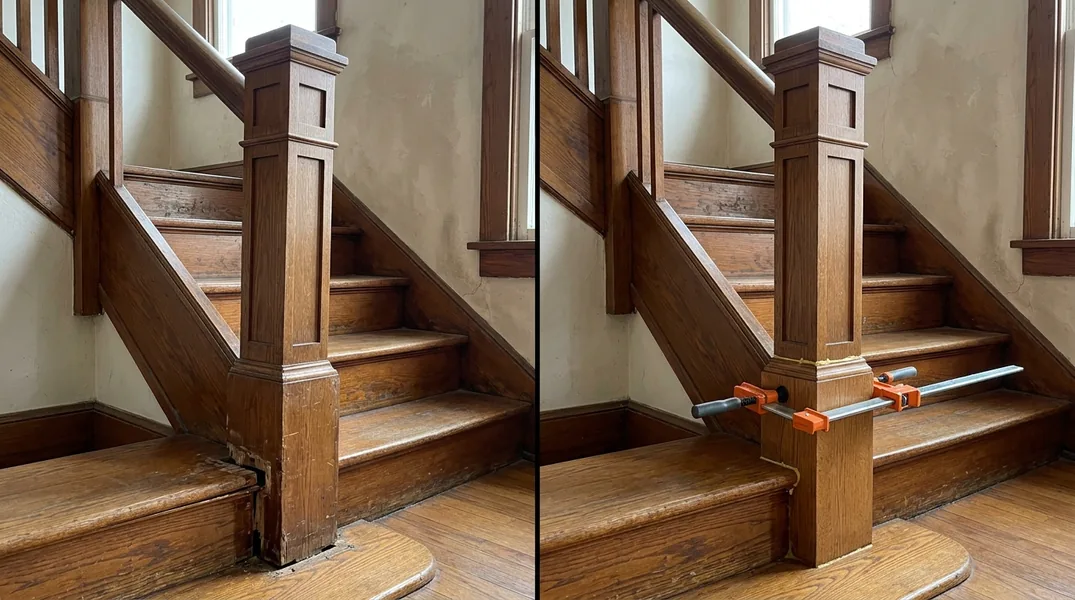
We also install interior doors, exterior and entry doors, custom built-ins and shelving, cabinets and vanities, and stairs and railings. The craft is in the detail: a built-in bookcase that fits a wall that is not square, a stair stringer that carries the tread safely, and railings that meet code without looking institutional.
Permits, Repair-or-Replace & What We Do Not Do
Permits are commonly required for structural work such as removing or altering a load-bearing wall, replacing beams or joists, and installing or modifying decks and stairs. Requirements vary by jurisdiction and by the scope of the work. In most cases, the local building department will require a permit application and inspection before and after the work is complete. We work with permit requirements as part of our process, but the decision to permit is yours and your local authority's. We can help document the damage for an insurance claim if you have one, but we cannot promise coverage or speak to what your policy will pay. That conversation belongs between you and your insurance company.
The repair-or-replace decision comes down to three things: how much sound wood is left in the member, whether the water source that caused the damage can be closed, and what the two options cost. We quote both when both are realistic, and we explain the trade-offs. Repair is always preferable when the wood justifies it, but replacement is sometimes the honest answer. Requirements vary by location and by the type of work, and thresholds differ. Always verify with the Nashville building department before starting your project, and let us know what they require. Call us for an estimate and to discuss your specific situation. We are fully insured and ready to help.